Where should I start? Should I begin with my meeting with Ibrahim or with Sultan? Or perhaps I should start with my own history?
My name is Maimuna Muhammad Dikko. I was born and raised in Abuja, Nigeria. My father, Alhaji Muhammad Dikko, hails from the town of Yalleman in Jigawa State. Yalleman is a beautiful Fulani town, blessed with wealth, and its people are spread across Nigeria, particularly in Lagos and Port Harcourt, as much of their wealth comes from currency exchange businesses. Unlike the family tradition, my father did not follow this path because he was a scholar. He attended primary school in Yalleman like his siblings, but due to his intelligence, the headmaster advised his father, Alhaji Lawan Dikko, to send him abroad for better education if he could afford it.
As my grandfather was well-off at the time, he gathered a significant amount of money and took my father to Lagos. With the help of relatives there, they secured a visa for my father to travel to England, where he gained admission to Gifted International College to begin his secondary education. During session breaks, my father would return to Nigeria to visit his parents and siblings before going back. Each time he was to return, Alhaji Lawan would provide him with substantial funds for registration and daily needs. My father’s mother, Hajiya Adama, wasn’t left out either; she secretly sold milk from her inherited cows without her husband’s knowledge to raise money for my father.
Through hard work, my father completed his secondary education and immediately secured a scholarship to study at Oxford University, where he pursued business administration with the goal of returning home to assist his father in his business. At that point, he told his parents there was no need to pay for his education since he was on a scholarship, but Alhaji Lawan still sent him money for his needs. After completing his first degree, he returned home intending to take over his father’s business, but this plan was thwarted due to a family dispute. His mother’s co-wife, known as Hajja, vehemently opposed the idea, arguing that after all the money spent on his education, he couldn’t just return and claim the family wealth. She added that if he was so educated, he should focus on academics, not business, and that the other children in the family were also entitled to their share.
Disheartened, my father returned to England to pursue his master’s degree and later a PhD. After completing his studies, he took up a lecturing position at Oxford. Five years into his lecturing career, he was awarded a professorship. That same year, his parents insisted he return to Nigeria to settle down like his siblings. Due to his expertise in business and international relations, upon his return, the Nigerian government appointed him as an ambassador. His first posting was to our neighboring country, Niger.
About my mother:
My mother, Hajiya Fatima, fondly called Bintou, is originally a Tuareg from Niger. Her father passed away when she was young, and she was the only child her parents had. Her mother, after whom I am named (Maimuna), took care of her and her education until she completed secondary school. There were attempts to send her to Nigeria for university, but due to financial constraints and lack of connections, it didn’t work out. It was during this time that God brought her and my father together when he was serving as Nigeria’s ambassador to Niger. Initially, he felt pity for her and admired her passion for education. Later, love blossomed between them, despite their significant age difference. Since my grandmother (Hajiya Adama) had been pressuring him about marriage, he faced no obstacles in marrying her. They wed, and he brought her to Nigeria, settling her in our home in Aso Drive, Abuja, where we still live today.
Episode Two: Meet My Family
Our house is large because when my father built it, he intended to bring his parents to live with us in Abuja. However, my grandfather (Baffa, Alhaji Lawan) refused to leave Yalleman. This led my father to build them a grand house in Yalleman, which became the talk of the town despite the wealth of its residents. He also hired many workers, from cleaners to cooks, for their comfort, saying it was time for them to rest. Whatever he did for his mother (Inna), he also did for Hajja. They truly lived a life of ease, eating well, resting, and traveling for Hajj every year. It’s also my father’s tradition that whenever he’s posted to a country as an ambassador, he takes us along for a month, including Baffa and Inna, so we can gain modern exposure, though he insists we won’t live abroad permanently due to cultural upbringing.
We are five siblings: three boys—Lawan, Habeeb, and Faruk—and two girls—Hafsat and me. Lawan is the eldest, followed by Habeeb, then Hafsat, me, and our youngest, Faruk. Since my mother gave birth to us in quick succession over seven years, there’s little age gap between us. After Faruk, her childbirth stopped, and my father said we were enough for him, praying for God’s blessings on us. Our home is beautiful, a perfect blend of Fulani and Tuareg heritage, making it hard for people to pinpoint our tribe. Our grandmother often sends us remedies for our talkativeness because we inherited a lot of chatter!
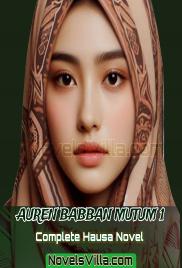
I, Maimunatu, called Maimoon after my maternal grandmother, am the fourth child and the youngest girl. I’m fair-skinned, a silky mix of Fulani and Tuareg, with moderate height, an oval-shaped face, almond-shaped eyes with long lashes, perfectly drawn eyebrows, a well-shaped nose, thin pink lips, and thick, shoulder-length hair. I have dimples on both cheeks that show even when I speak, let alone when I smile.
In our home, we speak Fulfulde with my father, Tuareg with my mother, and English among ourselves. At school, we speak English, so we don’t speak much Hausa unless we interact with neighbors or Hausa-speaking workers. Among my siblings, I’m the most talkative. My brother Walid nicknamed me “Parrot” when I was young because I ask questions about everything and won’t stop until I get answers, only to ask something else. From kindergarten, my father noticed I inherited his intellectual curiosity, though my siblings are also bright. He encourages my questions and answers them patiently, making us closer than I am with my mother. My mother, now a lawyer, jokes that I might follow in her footsteps due to my endless questions.
In basic school, I became a star—beautiful, hardworking, and talkative in a charming way. Everyone knew me at school. I avoid fights and am quite timid; if I accidentally wrong even a junior, I apologize because I’m very soft-hearted. I earned the nickname “Moon” in basic school due to my face’s shape, bright dimpled smile, and the connection to my name, Maimoon. The nickname stuck so much that it almost replaced my real name outside official records.
Since my mother was her mother’s (Daada) only child, she brought her to Nigeria to live with us. We built a section for her near Inna’s part of the house. As Daada had only one child, she dotes on us, especially Hafsat and me. She’s always braiding our hair or fussing over us, and despite our thick hair, she insists on styling it daily with enthusiasm.
Episode Three: Loved by All
Hafsat is a year older than me, so she’s one class ahead, but people think she’s much older because I have a petite frame—no height, no weight, just a bundle of chatter. Hafsat is quieter but observant and a copycat. She watches everything I do and reports to my mother or Daada, which often leads to scolding from my strict mother, causing frequent clashes between us. My closest ally is Habeeb; we share the same talkativeness and love for learning. After school, I’m always in his room. He helps with my homework, lends me novels, and sometimes reads to me while I lie on his lap. Faruk, the youngest, is always with Daada, as his room is in her part of the house. You only see him in our section when Daddy is in town.
In Basic 4, while Hafsat was in Basic 5, we both took the Common Entrance Exam and passed. My mother tried convincing my father to send us abroad for studies, but he refused, saying raising girls abroad, even in Arab countries, was challenging. He believed Nigerian schools were good enough. Without delay, Hafsat and I were enrolled in the same secondary school, a boarding school, which upset her greatly—she even cried, and Daddy teased her about being in the same set as her younger sister. I apologized and promised to underperform in the promotional exam so she could move ahead while I repeated a class. My mother was heartbroken about us leaving for boarding school, especially since it meant we’d be away. I caught her crying in the kitchen while preparing stew for us, and when I bombarded her with questions, she ignored me, then suddenly hugged me, continuing to cry.
On the day we left, my mother said she wouldn’t see us off, but it took Daddy and Daada’s efforts to pry us from her as she sobbed, saying we were abandoning our studies. Daddy just laughed, while I was secretly thrilled despite being only ten years old, though people thought I wasn’t even seven due to my small size.









































Description
Where should I start? Should I begin with my meeting with Ibrahim or with Sultan? Or perhaps I should start with my own history?
My name is Maimuna Muhammad Dikko. I was born and raised in Abuja, Nigeria. My father, Alhaji Muhammad Dikko, hails from the town of Yalleman in Jigawa State. Yalleman is a beautiful Fulani town, blessed with wealth, and its people are spread across Nigeria, particularly in Lagos and Port Harcourt, as much of their wealth comes from currency exchange businesses. Unlike the family tradition, my father did not follow this path because he was a scholar. He attended primary school in Yalleman like his siblings, but due to his intelligence, the headmaster advised his father, Alhaji Lawan Dikko, to send him abroad for better education if he could afford it.
As my grandfather was well-off at the time, he gathered a significant amount of money and took my father to Lagos. With the help of relatives there, they secured a visa for my father to travel to England, where he gained admission to Gifted International College to begin his secondary education. During session breaks, my father would return to Nigeria to visit his parents and siblings before going back. Each time he was to return, Alhaji Lawan would provide him with substantial funds for registration and daily needs. My father’s mother, Hajiya Adama, wasn’t left out either; she secretly sold milk from her inherited cows without her husband’s knowledge to raise money for my father.
Through hard work, my father completed his secondary education and immediately secured a scholarship to study at Oxford University, where he pursued business administration with the goal of returning home to assist his father in his business. At that point, he told his parents there was no need to pay for his education since he was on a scholarship, but Alhaji Lawan still sent him money for his needs. After completing his first degree, he returned home intending to take over his father’s business, but this plan was thwarted due to a family dispute. His mother’s co-wife, known as Hajja, vehemently opposed the idea, arguing that after all the money spent on his education, he couldn’t just return and claim the family wealth. She added that if he was so educated, he should focus on academics, not business, and that the other children in the family were also entitled to their share.
Disheartened, my father returned to England to pursue his master’s degree and later a PhD. After completing his studies, he took up a lecturing position at Oxford. Five years into his lecturing career, he was awarded a professorship. That same year, his parents insisted he return to Nigeria to settle down like his siblings. Due to his expertise in business and international relations, upon his return, the Nigerian government appointed him as an ambassador. His first posting was to our neighboring country, Niger.
About my mother:
My mother, Hajiya Fatima, fondly called Bintou, is originally a Tuareg from Niger. Her father passed away when she was young, and she was the only child her parents had. Her mother, after whom I am named (Maimuna), took care of her and her education until she completed secondary school. There were attempts to send her to Nigeria for university, but due to financial constraints and lack of connections, it didn’t work out. It was during this time that God brought her and my father together when he was serving as Nigeria’s ambassador to Niger. Initially, he felt pity for her and admired her passion for education. Later, love blossomed between them, despite their significant age difference. Since my grandmother (Hajiya Adama) had been pressuring him about marriage, he faced no obstacles in marrying her. They wed, and he brought her to Nigeria, settling her in our home in Aso Drive, Abuja, where we still live today.
Episode Two: Meet My Family
Our house is large because when my father built it, he intended to bring his parents to live with us in Abuja. However, my grandfather (Baffa, Alhaji Lawan) refused to leave Yalleman. This led my father to build them a grand house in Yalleman, which became the talk of the town despite the wealth of its residents. He also hired many workers, from cleaners to cooks, for their comfort, saying it was time for them to rest. Whatever he did for his mother (Inna), he also did for Hajja. They truly lived a life of ease, eating well, resting, and traveling for Hajj every year. It’s also my father’s tradition that whenever he’s posted to a country as an ambassador, he takes us along for a month, including Baffa and Inna, so we can gain modern exposure, though he insists we won’t live abroad permanently due to cultural upbringing.
We are five siblings: three boys—Lawan, Habeeb, and Faruk—and two girls—Hafsat and me. Lawan is the eldest, followed by Habeeb, then Hafsat, me, and our youngest, Faruk. Since my mother gave birth to us in quick succession over seven years, there’s little age gap between us. After Faruk, her childbirth stopped, and my father said we were enough for him, praying for God’s blessings on us. Our home is beautiful, a perfect blend of Fulani and Tuareg heritage, making it hard for people to pinpoint our tribe. Our grandmother often sends us remedies for our talkativeness because we inherited a lot of chatter!
I, Maimunatu, called Maimoon after my maternal grandmother, am the fourth child and the youngest girl. I’m fair-skinned, a silky mix of Fulani and Tuareg, with moderate height, an oval-shaped face, almond-shaped eyes with long lashes, perfectly drawn eyebrows, a well-shaped nose, thin pink lips, and thick, shoulder-length hair. I have dimples on both cheeks that show even when I speak, let alone when I smile.
In our home, we speak Fulfulde with my father, Tuareg with my mother, and English among ourselves. At school, we speak English, so we don’t speak much Hausa unless we interact with neighbors or Hausa-speaking workers. Among my siblings, I’m the most talkative. My brother Walid nicknamed me “Parrot” when I was young because I ask questions about everything and won’t stop until I get answers, only to ask something else. From kindergarten, my father noticed I inherited his intellectual curiosity, though my siblings are also bright. He encourages my questions and answers them patiently, making us closer than I am with my mother. My mother, now a lawyer, jokes that I might follow in her footsteps due to my endless questions.
In basic school, I became a star—beautiful, hardworking, and talkative in a charming way. Everyone knew me at school. I avoid fights and am quite timid; if I accidentally wrong even a junior, I apologize because I’m very soft-hearted. I earned the nickname “Moon” in basic school due to my face’s shape, bright dimpled smile, and the connection to my name, Maimoon. The nickname stuck so much that it almost replaced my real name outside official records.
Since my mother was her mother’s (Daada) only child, she brought her to Nigeria to live with us. We built a section for her near Inna’s part of the house. As Daada had only one child, she dotes on us, especially Hafsat and me. She’s always braiding our hair or fussing over us, and despite our thick hair, she insists on styling it daily with enthusiasm.
Episode Three: Loved by All
Hafsat is a year older than me, so she’s one class ahead, but people think she’s much older because I have a petite frame—no height, no weight, just a bundle of chatter. Hafsat is quieter but observant and a copycat. She watches everything I do and reports to my mother or Daada, which often leads to scolding from my strict mother, causing frequent clashes between us. My closest ally is Habeeb; we share the same talkativeness and love for learning. After school, I’m always in his room. He helps with my homework, lends me novels, and sometimes reads to me while I lie on his lap. Faruk, the youngest, is always with Daada, as his room is in her part of the house. You only see him in our section when Daddy is in town.
In Basic 4, while Hafsat was in Basic 5, we both took the Common Entrance Exam and passed. My mother tried convincing my father to send us abroad for studies, but he refused, saying raising girls abroad, even in Arab countries, was challenging. He believed Nigerian schools were good enough. Without delay, Hafsat and I were enrolled in the same secondary school, a boarding school, which upset her greatly—she even cried, and Daddy teased her about being in the same set as her younger sister. I apologized and promised to underperform in the promotional exam so she could move ahead while I repeated a class. My mother was heartbroken about us leaving for boarding school, especially since it meant we’d be away. I caught her crying in the kitchen while preparing stew for us, and when I bombarded her with questions, she ignored me, then suddenly hugged me, continuing to cry.
On the day we left, my mother said she wouldn’t see us off, but it took Daddy and Daada’s efforts to pry us from her as she sobbed, saying we were abandoning our studies. Daddy just laughed, while I was secretly thrilled despite being only ten years old, though people thought I wasn’t even seven due to my small size.